Omiyage: A look into Japan’s souvenir-gifting culture
Gift-giving has always been a major part of Japanese culture: it is a way that the people here show love and respect to one another. Thus, it is extremely common for them to give souvenirs, or “omiyage” in Japanese, to others after returning from a trip.

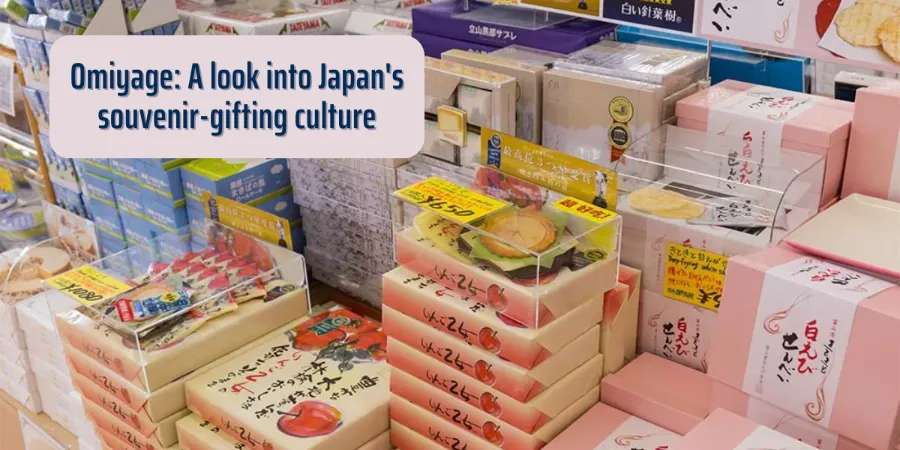
What makes the souvenir-gifting culture so big in Japan? What makes it special? Let GoEMON show you in this article!
1. What is Omiyage?
Generally, Omiyage is a present that one gives their family and friends after returning from a trip. Made up of two kanjis “土” meaning local and “産” meaning produce; Omiyage are items representing the region where they are from. And by giving Omiyage, you are also giving others a piece of where you visited.
2. How is it different from souvenirs?
Though can be translated into souvenirs in English, the concept of Omiyage is slightly different from that of its English counterpart.
When it comes to souvenirs, many people buy those for themselves to remind themselves of the place that they have traveled to. However, Omiyage, most of the time, are bought not for oneself but specifically for the purpose of gifting others.
Next, Omiyage in Japan are also often edibles: it can range from snacks and desserts such as mochi, cookies, candies, to even condiments like shoyu (Japanese soy sauce) or spices.
3. History of Omiyage
Omiyage’s inception dates back to the days when people used to make long journeys to pray at Shinto Shrine. And since only a few people were able to go, they would buy paper trinkets sold around these Shrines and bring them back as gifts for the ones at home. These paper trinkets are called “miyage,” and the as the gifts evolved to becoming more than just paper trinkets, the term was added an o (or お) - a prefix used in Japanese to represent formality and politeness.
4. Cultural significance of Omiyage in Japan
Omiyage plays a vital part in maintaining pleasant and harmonious relationships in Japanese society. It shows that you still think of and appreciate the other party while leaving them behind to travel to another place. And as mentioned earlier, giving Omiyage is also a way for you to share with the other party a part of the place that you visited.
The same also applies to the workplace setting, where bringing back omiyage is a way of showing respect and appreciation to your coworkers for everything that they have helped you with at work.
5. Where to buy Omiyage
Omiyage can be found in many places:
- Train stations (usually the bigger stations) and airports
- Department stores
- Shopping streets
- Near popular tourist spots
6. Some examples of famous Omiyage
- Tokyo Banana from Tokyo: a type of banana-shaped sponge cake with cream filling. It is also available in many different versions, such as cheesecake, coffee filing, custard, etc. with super cute packaging and designs.

- Shiroi Koibito from Hokkaido: the dessert consists of two layers of thin, crispy cookies with a layer of white chocolate sandwiched in the middle.

- 551 Horai steamed pork buns from Osaka: the famous pork mince-filled steamed buns that is only available in Osaka!

- Yatsuhashi from Kyoto: a traditional sweet made from glutinous rice flour, sugar, and cinnamon stuffed with traditional red bean filling. It is also available in a variety of other flavors as well.

In this article, we have explored the history of Japan’s Omiyage gift-giving culture. Nothing’s better than receiving omiyage from others!
Don't forget to follow GoEMON Global for the latest updates on life in Japan!